Portfolio Rebalancing Strategies: Maintaining Optimal Asset Allocation
Why Rebalancing Matters
Portfolio rebalancing is the process of realigning the weightings of assets in a portfolio to maintain the intended asset allocation. Over time, as different assets generate varying returns, a portfolio naturally drifts from its target allocation, potentially altering its risk-return profile.
Effective rebalancing serves three primary purposes:
- Maintaining the portfolio's intended risk profile
- Enforcing investment discipline by systematically "buying low and selling high"
- Aligning the portfolio with changing investment objectives or market conditions
Major Rebalancing Approaches
1. Calendar-Based Rebalancing
This approach involves adjusting portfolios at predetermined time intervals, regardless of market movements. Common frequencies include:
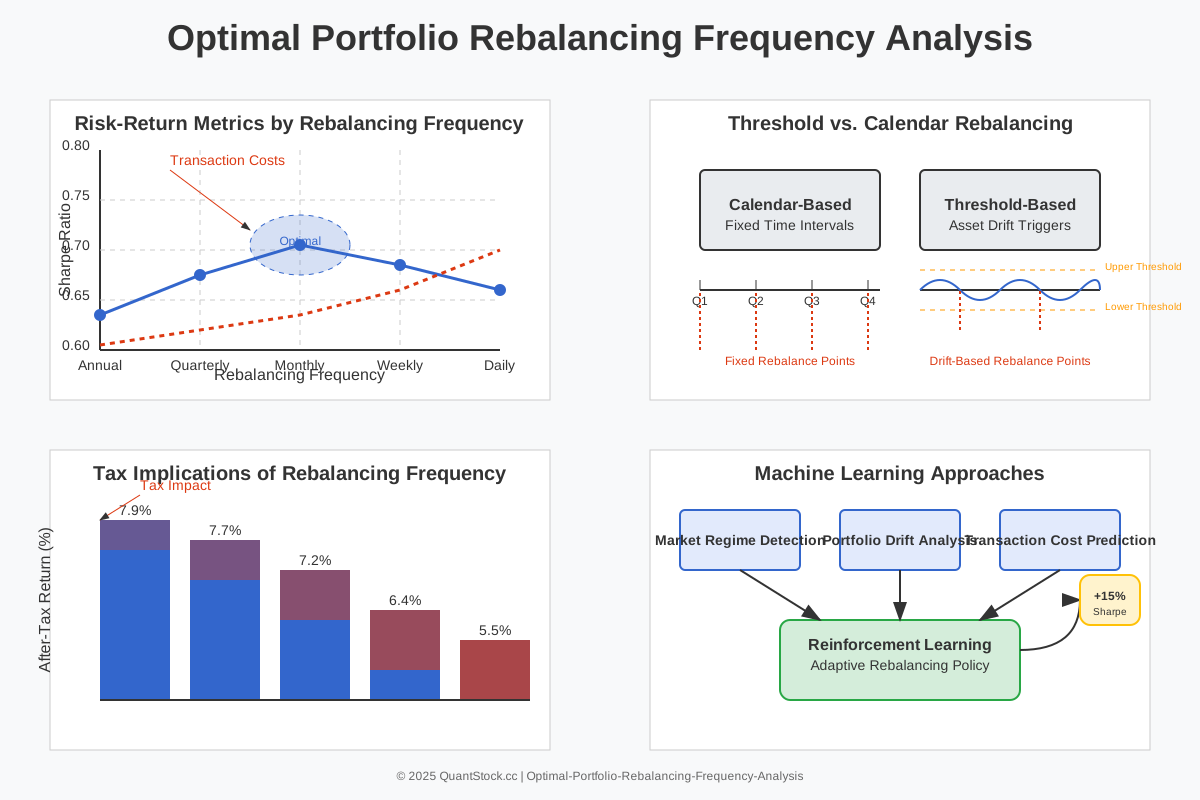
- Monthly: Provides tight alignment but may incur higher transaction costs
- Quarterly: A popular middle-ground approach for many investors
- Semi-annually: Reduces transaction costs while maintaining reasonable adherence to targets
- Annually: Minimizes trading costs but allows more significant drift between rebalancings
Calendar rebalancing offers simplicity and discipline but may miss opportunities created by significant market movements between scheduled dates.
2. Percentage-of-Portfolio Rebalancing
Also called "threshold" or "corridor" rebalancing, this method triggers adjustments when asset allocations drift beyond predetermined thresholds from their targets. For example:
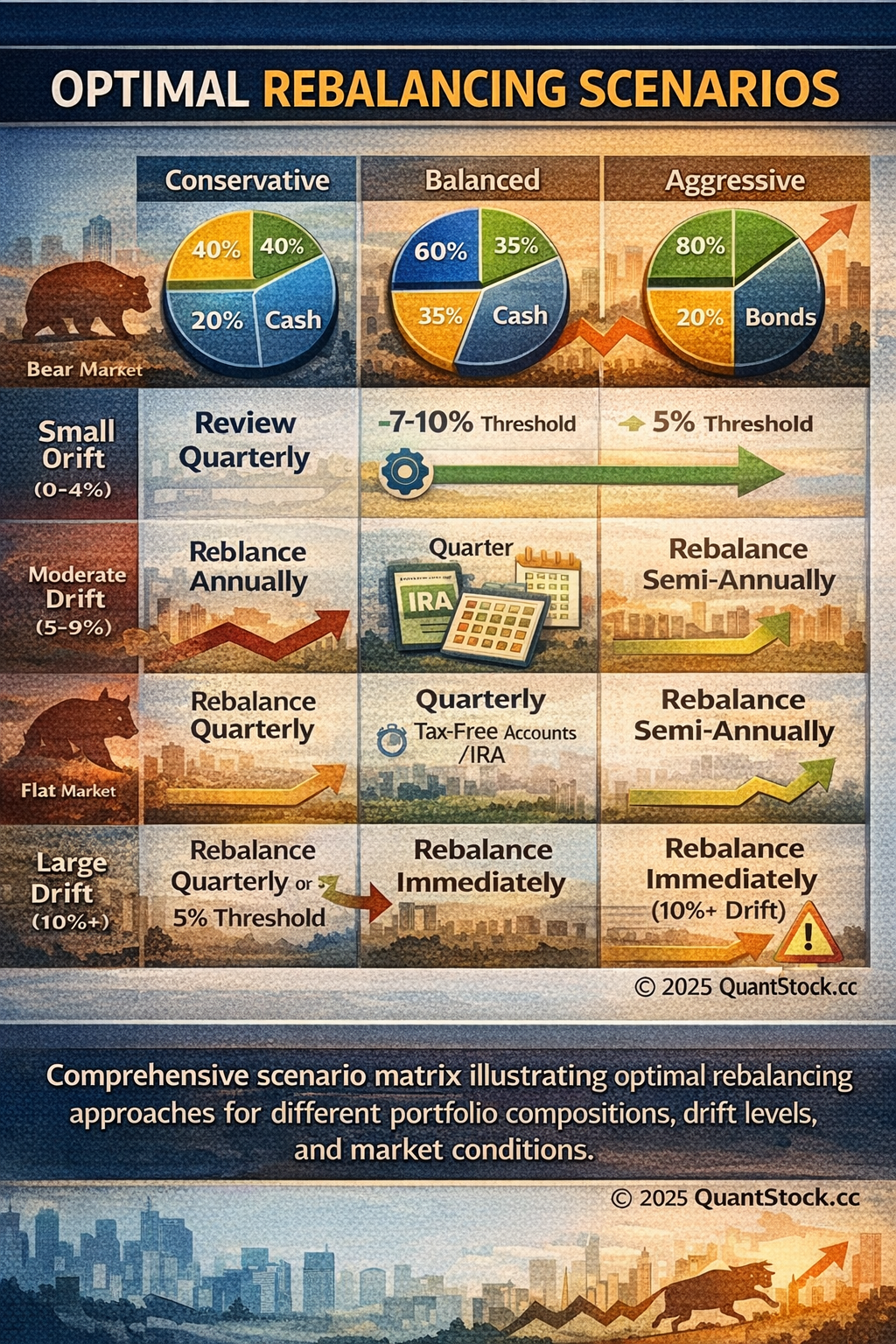
- A 5% threshold would trigger rebalancing when any asset class deviates by 5 percentage points from its target
- Different thresholds can be set for different asset classes based on their volatility
- Narrower corridors maintain tighter adherence to targets but increase trading frequency
This approach is more responsive to market movements than calendar-based rebalancing and can capture more rebalancing opportunities during volatile markets.
3. Constant Proportion Portfolio Insurance (CPPI)
CPPI is a dynamic rebalancing strategy that adjusts allocations between risky and safe assets based on a predetermined "cushion" above a floor value. As the portfolio value increases, exposure to risky assets increases; as it falls, exposure is reduced.
This strategy provides downside protection while allowing upside participation, making it suitable for investors with specific capital preservation requirements.
4. Tactical Rebalancing
This approach combines strategic rebalancing with tactical asset allocation views. While maintaining broad adherence to strategic targets, tactical rebalancing allows deliberate deviations based on market outlook. For example:
- Rebalancing only partially toward targets when strong trends persist
- Adjusting rebalancing thresholds based on market volatility
- Incorporating valuation metrics into rebalancing decisions
Tactical rebalancing requires more active management but can potentially enhance returns through market timing elements.
Optimizing Rebalancing Implementation
Tax-Efficient Rebalancing
For taxable accounts, tax considerations can significantly impact rebalancing approaches:
- Prioritizing rebalancing in tax-advantaged accounts when possible
- Using new contributions or withdrawals to adjust allocations without selling existing positions
- Harvesting tax losses during rebalancing to offset capital gains
- Considering longer rebalancing intervals to minimize short-term capital gains
Cost-Minimization Strategies
Several approaches can reduce transaction costs associated with rebalancing:
- Cash-flow rebalancing: Using new contributions or withdrawals to adjust allocations
- Rebalancing only the most significantly misaligned assets: Focusing adjustments on the most out-of-balance positions
- Setting wider corridors for assets with higher transaction costs: Allowing more drift in illiquid or high-cost-to-trade assets
Partial Rebalancing
Rather than rebalancing fully to target weights, partial rebalancing adjusts positions only partway toward targets. This approach can reduce transaction costs and tax implications while still managing risk. Research suggests that rebalancing 50% of the way back to targets can capture most of the benefits of full rebalancing with substantially reduced costs.
Measuring Rebalancing Effectiveness
Rebalancing Return
The "rebalancing bonus" or "diversification return" represents the potential outperformance of a rebalanced portfolio compared to a buy-and-hold strategy. This return tends to be higher when:
- Asset class volatilities are high
- Correlations between assets are low
- Assets have similar expected returns
However, during strong trending markets, rebalancing may reduce returns by trimming exposure to outperforming assets.
Risk-Adjusted Metrics
The primary benefit of rebalancing often appears in risk-adjusted metrics rather than absolute returns. Effective rebalancing typically improves:
- Sharpe ratio (risk-adjusted return)
- Maximum drawdown (peak-to-trough decline)
- Volatility consistency over time
Conclusion
Portfolio rebalancing is a critical but often underappreciated component of investment success. By selecting and implementing an appropriate rebalancing strategy aligned with your investment objectives, tax situation, and cost sensitivity, you can maintain your desired risk profile while potentially enhancing long-term returns.
Our portfolio management tools can help you implement customized rebalancing strategies that balance risk management, performance goals, and practical implementation considerations.
Free Trading Math & Risk Cheat Sheet
Every key formula in one PDF: breakeven win rates, expectancy, position sizing, drawdown recovery, volatility drag, VaR and CVaR. Plus occasional emails when we publish new quant tools.