Emergency Fund Calculator: How Much Should You Save for Emergencies?
Building Your Financial Safety Net
Financial emergencies happen to everyone—job loss, medical expenses, car repairs, home repairs, or unexpected family obligations. An emergency fund protects you from derailing your financial progress or going into debt when unexpected expenses arise. Our emergency fund calculator helps you determine exactly how much to save based on your specific situation and risk factors.
What This Calculator Does
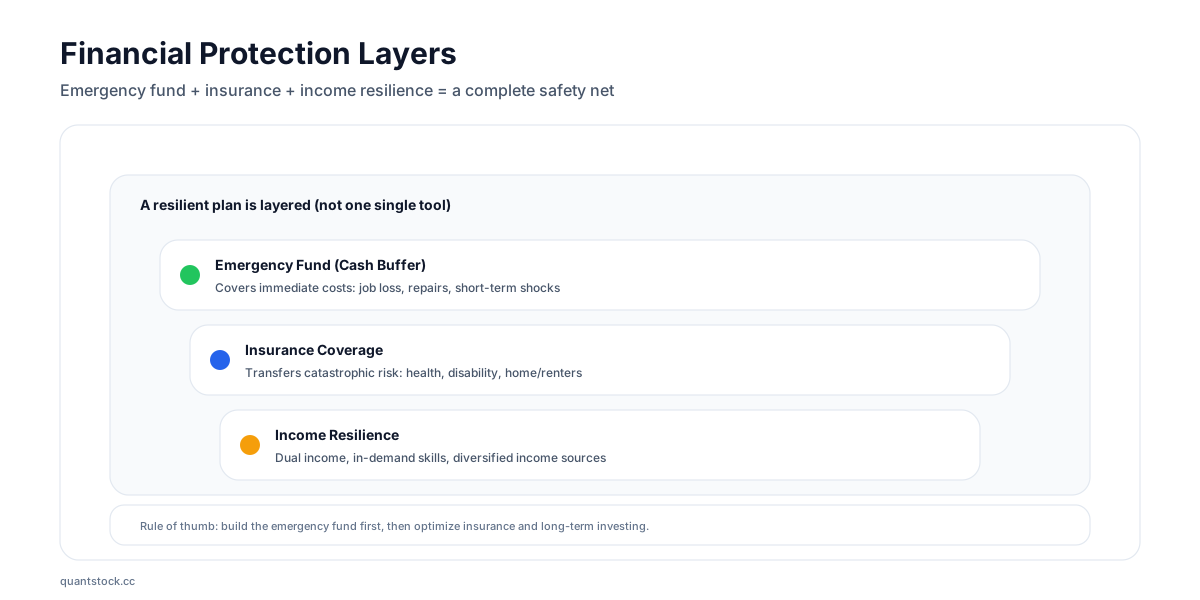
The emergency fund calculator analyzes your financial situation to recommend your ideal emergency savings target. It considers multiple factors:
Monthly Essential Expenses: Your calculator determines which expenses are truly essential (housing, utilities, food, insurance, minimum debt payments) versus discretionary spending you could eliminate in an emergency.
Income Stability: The calculator adjusts recommendations based on whether you have stable employment, variable income, or higher job loss risk. More income stability means you can maintain a smaller emergency fund.
Dependents: The calculator accounts for whether you're supporting children, elderly parents, or other dependents who increase your financial obligations.
Insurance Coverage: Adequate health, disability, and homeowner's/renter's insurance reduces the need for emergency savings since insurance handles certain emergencies.
Multiple Income Sources: If you're in a dual-income household, job loss from one earner is less devastating than complete household income loss.
The calculator provides a target amount typically ranging from 3-12 months of essential expenses, with most people falling in the 3-6 month range.
Who Should Use This Calculator
This calculator is valuable for:
Every adult, regardless of income level. Financial experts universally agree that emergency funds are the foundation of financial security. Without one, you're one emergency away from financial crisis.
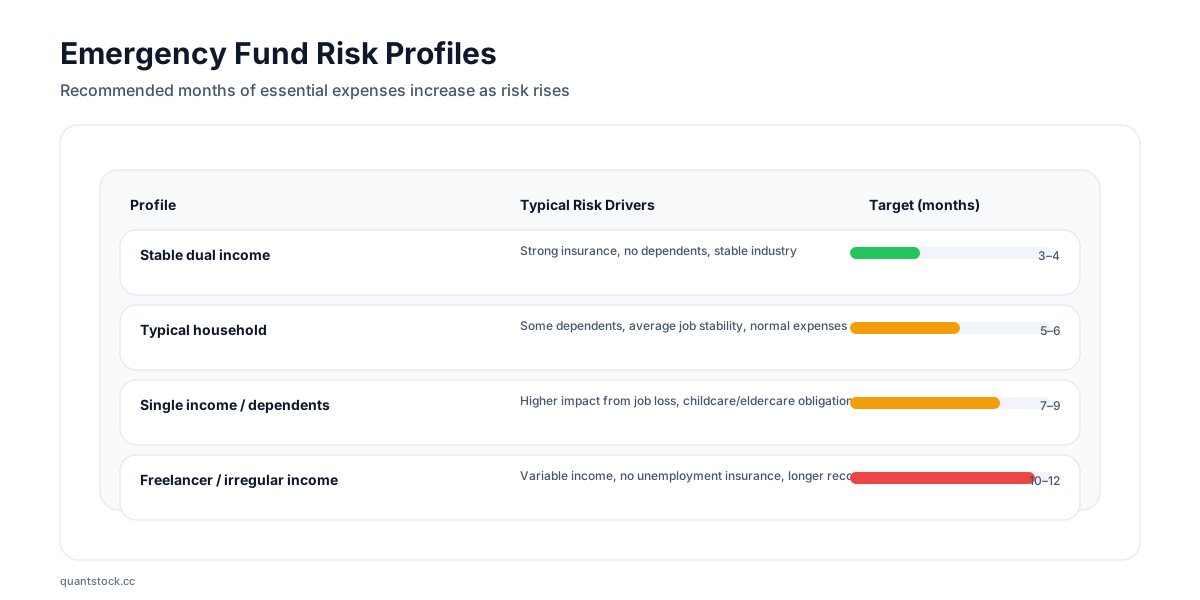
Freelancers and gig workers who have irregular income and can't predict monthly earnings with certainty. They often need larger emergency funds (6-12 months) compared to salaried employees.
Single-income households where one person's job loss means complete household income loss. These situations require more substantial emergency reserves.
People with variable expenses such as homeowners (unexpected repairs), parents (child-related emergencies), or those with ongoing health issues (medical costs).
How the Calculator Works
The emergency fund calculator uses a risk-adjusted methodology:
Step 1: Calculate Monthly Essential Expenses
The calculator separates needs from wants. Essential expenses typically include:
- Housing (rent/mortgage, property tax, HOA fees)
- Utilities (electric, gas, water, internet, phone)
- Food (groceries, not dining out)
- Transportation (car payment, insurance, gas, or public transit)
- Insurance (health, home/rental, life, disability)
- Minimum debt payments (student loans, credit cards, personal loans)
- Dependent care (childcare, elder care)
Discretionary spending is excluded since you'd eliminate these during an emergency.
Step 2: Assess Income Stability
The calculator evaluates:
- Employment type (W-2 employee, contractor, freelancer, small business owner)
- Job security (highly stable profession vs. volatile industry)
- Income predictability (salary vs. commission/variable income)
- Ease of finding new employment in your field
- Geographic job market (robust vs. limited)
Step 3: Evaluate Additional Risk Factors
Factors that increase recommended emergency fund size:
- Single income household (vs. dual income)
- Number of dependents
- Self-employment or business ownership
- Health issues or lack of insurance
- High-cost-of-living area
- Specialized profession (longer to find equivalent work)
- Older age (potentially longer job search)
Step 4: Calculate Recommended Fund Size
The calculator uses these inputs to recommend a specific month range (3-12 months) and multiplies your monthly essential expenses by this number to provide your target emergency fund dollar amount.

How to Use the Calculator (Step-by-Step)
Step 1: Calculate Your Monthly Essential Expenses
Review your last 3 months of spending. Separate true essentials from discretionary items. Be honest—entertainment, dining out, and subscription services aren't essential. Add up your monthly essential expenses.
Step 2: Input Your Employment Situation
Select your employment type from options like full-time employee, part-time, self-employed, contractor, or multiple income sources. Be realistic about your job stability.
Step 3: Enter Number of Dependents
Input how many people rely on your income—children, elderly parents, disabled family members. Each dependent increases your recommended emergency fund size.
Step 4: Assess Your Insurance Coverage
Indicate whether you have adequate health insurance, disability insurance, homeowner's/renter's insurance. Good insurance reduces emergency fund needs since insurance handles certain emergencies.
Step 5: Evaluate Income Volatility
Rate your income stability. Salary workers have high stability. Commission-based workers have medium stability. Freelancers and business owners have low stability.
Step 6: Consider Industry and Job Market
Is your profession in high demand? Can you find equivalent work quickly? Specialized professions or weak job markets increase recommended fund sizes.
Step 7: Review Your Target Amount
The calculator provides your recommended emergency fund size in both months of expenses and total dollar amount. This is your savings goal.
Step 8: Determine Your Monthly Savings Contribution
Divide your target amount by a realistic timeline (12-24 months for most people) to determine how much to save monthly. Automate this savings contribution.
How to Interpret the Results
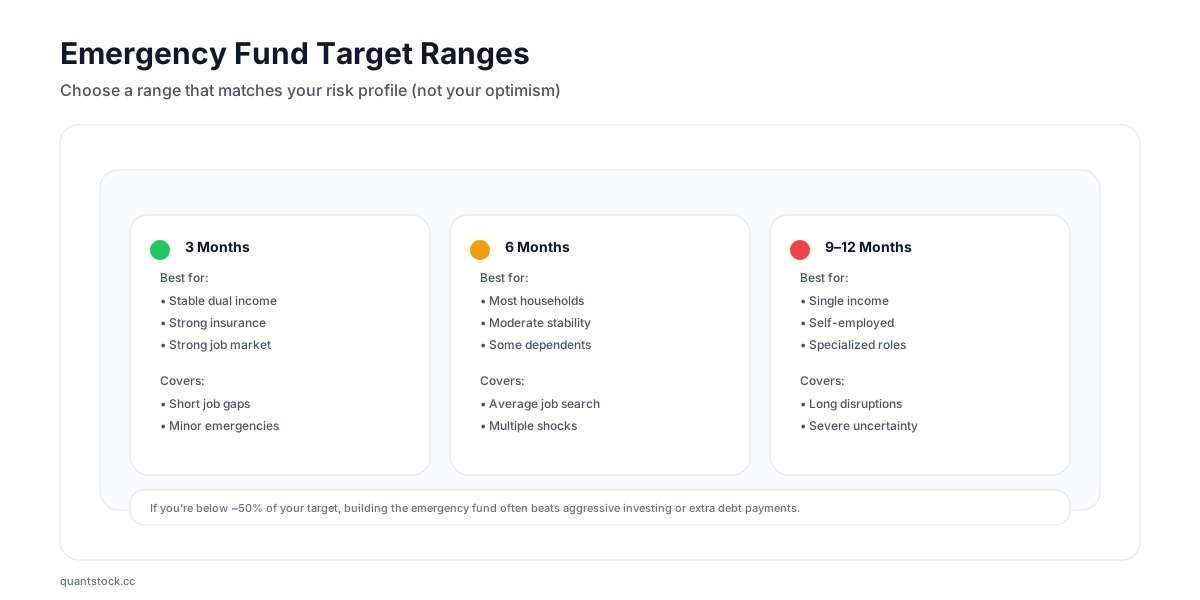
3 Months of Expenses: This is typically recommended for stable dual-income households with good insurance, no dependents, and strong job markets. It covers short-term unemployment or unexpected expenses but requires quick recovery.
6 Months of Expenses: This is the standard recommendation for most people. It covers average job search times (3-4 months), temporary disability, or multiple simultaneous emergencies. This is the baseline target for typical situations.
9-12 Months of Expenses: This is recommended for single-income households, self-employed individuals, those in specialized professions with longer job search times, or people with higher risk factors. This provides extended protection during severe financial disruptions.
Prioritization Level: If your current emergency fund is less than half your recommended amount, building your emergency fund should be your top financial priority—above aggressive investing, above extra mortgage payments, above everything except high-interest debt.
Real-World Use Cases
Case 1: Stable Dual-Income Household
Mark and Lisa are both employed full-time with stable jobs in strong industries. Their essential monthly expenses total $4,000. The calculator recommends 4 months of expenses ($16,000) given their dual incomes and job stability. They automate $500 monthly savings and reach their goal in 32 months.
Case 2: Single Parent with Variable Income
Jordan is a self-employed graphic designer with one child. Essential monthly expenses are $3,500. The calculator recommends 8 months of expenses ($28,000) due to income variability and dependent. Jordan saves $400 monthly and uses client bonuses to accelerate progress, reaching the target in 5 years.
Case 3: Recent Graduate Starting Career
Alex just started a first job with $2,200 in essential monthly expenses and no dependents. The calculator recommends 5 months ($11,000) accounting for lower job security early in career. By living with roommates and controlling expenses, Alex saves $600 monthly and builds the fund in 18 months.
Case 4: Freelancer with Irregular Income
Taylor freelances full-time with highly variable monthly income ($3,000-$8,000). Essential expenses are $3,200 monthly. The calculator recommends 10 months ($32,000) given income unpredictability. Taylor saves 30% of all income regardless of amount, building the fund over 3 years.
Common Mistakes to Avoid
Confusing Total Expenses with Essential Expenses
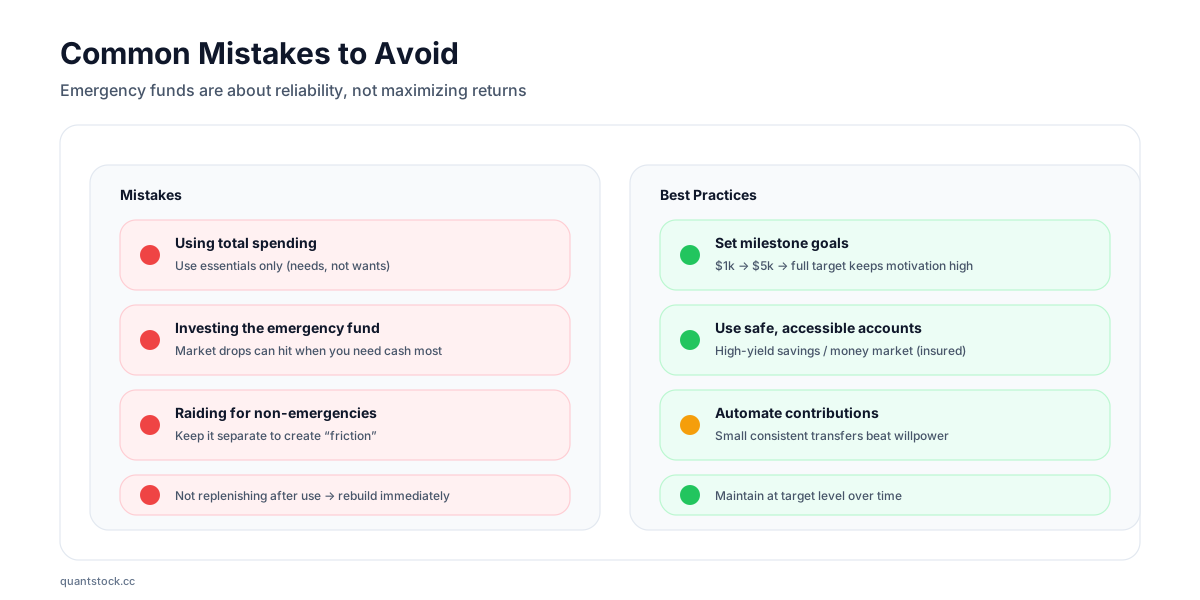
Don't calculate your emergency fund based on all spending. In a financial emergency, you'll eliminate dining out, entertainment, travel, and subscriptions. Only essential expenses matter for emergency fund calculations.
Setting the Bar Too High Initially
If your target is $30,000 but you only have $500, it feels impossible. Start with mini-goals: $1,000 first, then $5,000, then full amount. Celebrate milestones to maintain motivation.
Investing Your Emergency Fund
Emergency funds belong in high-yield savings accounts or money market accounts—not stocks, not crypto, not even bonds. You need guaranteed access to full value immediately. Market downturns often coincide with economic emergencies (job losses), so invested emergency funds might be down 20-30% exactly when you need them.
Raiding the Fund for Non-Emergencies
A great deal on a TV is not an emergency. A vacation is not an emergency. New car (when your current car works) is not an emergency. Your emergency fund is insurance, not a savings account for desires. If you struggle with this, keep the emergency fund in a separate bank from your regular checking to create friction.
Stopping Contributions After Reaching Goal
After using part of your emergency fund, immediately resume contributions to restore it. Your emergency fund should be constantly maintained at target level. Set up automatic transfers to prevent neglect.
Related Calculators
Building comprehensive financial security requires multiple steps:
Compound Interest Calculator - After establishing your emergency fund, use this calculator to see how additional savings can grow through investment. Emergency fund first, then investment growth.
Retirement Planning Calculator - Once your emergency fund is solid, focus on long-term retirement savings. This calculator shows how much to save monthly for retirement security.
Mortgage vs Investing Calculator - After emergency fund and retirement contributions are in place, determine whether to pay down mortgage debt or invest excess funds.
Frequently Asked Questions
Q: Where should I keep my emergency fund?
High-yield savings accounts at online banks offering 4-5% interest are ideal. Money market accounts are also acceptable. The fund should be FDIC-insured, immediately accessible, and not subject to market risk. Never keep your emergency fund in checking (too easy to accidentally spend), stocks (market risk), or CDs (access penalties).
Q: Is $1,000 enough for an emergency fund?
$1,000 is a good starting point and better than nothing, but it's not sufficient for most adults. $1,000 covers minor emergencies (car repair, medical copays) but won't cover major problems (job loss, large medical bills, major home repairs). Use $1,000 as your first milestone, then continue building.
Q: Should I build my emergency fund or pay off debt first?
Always save $1,000-$2,000 emergency fund first, even with debt. This prevents going further into debt when small emergencies arise. Then focus on high-interest debt (credit cards over 8-10% interest). After eliminating high-interest debt, build full emergency fund. Then tackle lower-interest debt (student loans, car loans, mortgages).
Q: What qualifies as an emergency?
True emergencies are unexpected expenses necessary for health, safety, shelter, or employment: job loss, medical emergencies, car repairs needed for work commuting, home repairs for safety/habitability, pet emergencies. Non-emergencies: sales/deals, vacations, elective purchases, predictable expenses (car registration, annual insurance premiums).
Q: How long does it take to build an emergency fund?
This depends on your savings rate. Someone saving $200 monthly needs 30 months to reach $6,000. Someone saving $500 monthly needs 12 months. Use windfalls (tax refunds, bonuses, gifts, side gig income) to accelerate progress. Most people build their emergency fund over 1-3 years.
Q: Should couples combine emergency funds?
If married or in committed long-term partnership with shared finances, yes—one combined emergency fund based on household expenses is appropriate. If dating or in early relationship stages with separate finances, maintain individual emergency funds.
Q: What if I'm self-employed?
Self-employed individuals need larger emergency funds (6-12 months) because: 1) Income is less predictable, 2) No unemployment insurance, 3) No employer benefits if unable to work, 4) Business expenses continue even during income disruptions, 5) Harder to get quick employment elsewhere. Build 12 months if possible—it's your personal "unemployment insurance."
Q: Can I invest part of my emergency fund once it's large?
Some people use a "tiered" approach: 1-2 months in savings (immediate access), 2-3 months in money market (1-2 day access), remaining months in conservative investment (bond fund or stable value fund) for higher returns. This is only appropriate after the full emergency fund is established and you're comfortable with slightly reduced liquidity.
Build Your Financial Foundation Today
An emergency fund isn't glamorous. It won't make you rich. It sits in a savings account earning modest interest while investments potentially earn much more. But it's the foundation of financial security.
Without an emergency fund, you're one unexpected expense away from financial setback. With an emergency fund, you face challenges with confidence, knowing you have the resources to handle whatever comes.
The best time to build an emergency fund is before you need it. Don't wait for a crisis to start—by then it's too late.
Calculate your ideal emergency fund size with our emergency fund calculator and start building your financial safety net today. Once established, explore our portfolio optimization tools to grow your wealth beyond emergency savings.
Free Trading Math & Risk Cheat Sheet
Every key formula in one PDF: breakeven win rates, expectancy, position sizing, drawdown recovery, volatility drag, VaR and CVaR. Plus occasional emails when we publish new quant tools.